

What Is Loss Cut in Betting? Meaning, Book Set & How It Works in India
Smart money management is a key part of following any sport today. Many people use specific terms like lagana and khana during the IPL to describe how they protect their balance. If you want to know what is loss cut in betting, it is a simple way to lower your risk when odds shift. You use this method to make sure you do not lose your entire stake if a match goes against your original choice.
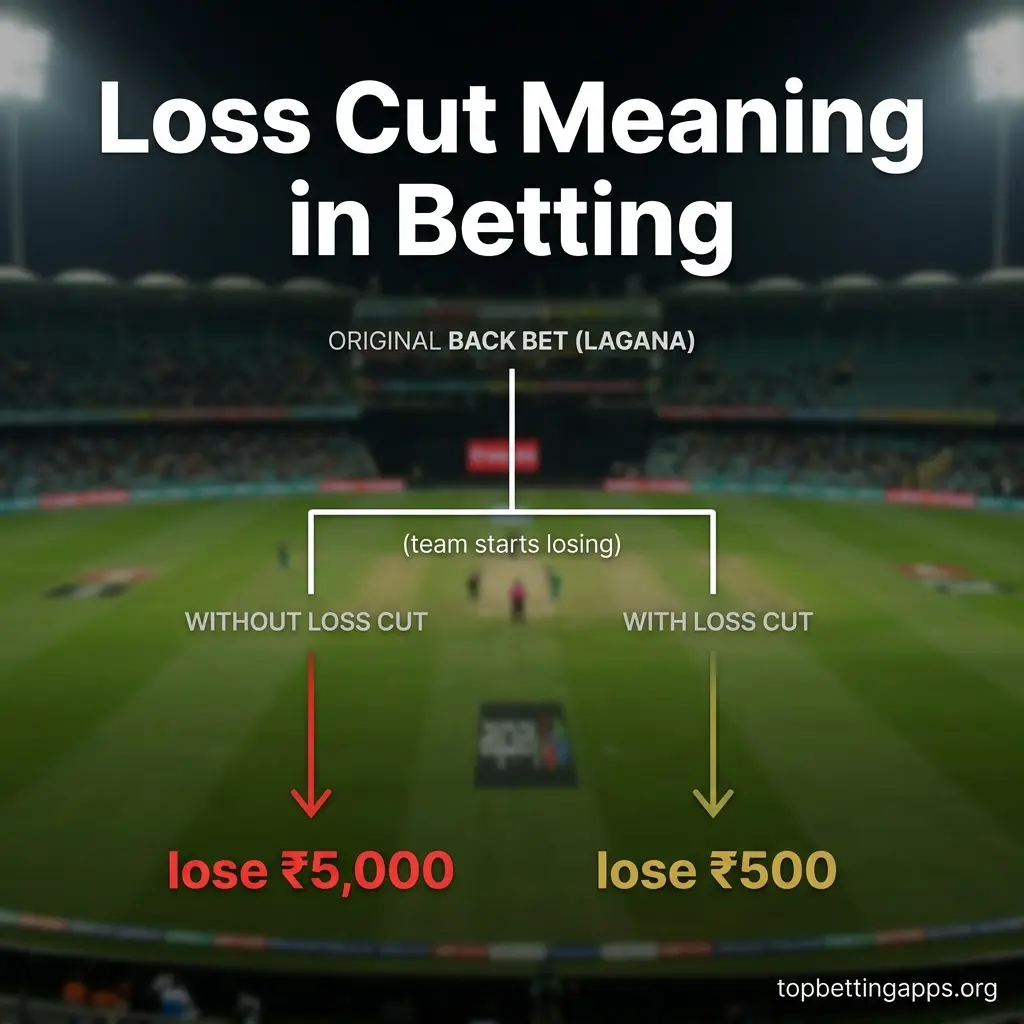
The loss cut meaning in betting refers to placing a second bet to cancel out potential losses. It is a safety move used when the team you backed starts to perform poorly. By using this strategy, you exit a position with a smaller loss instead of losing everything you wagered.
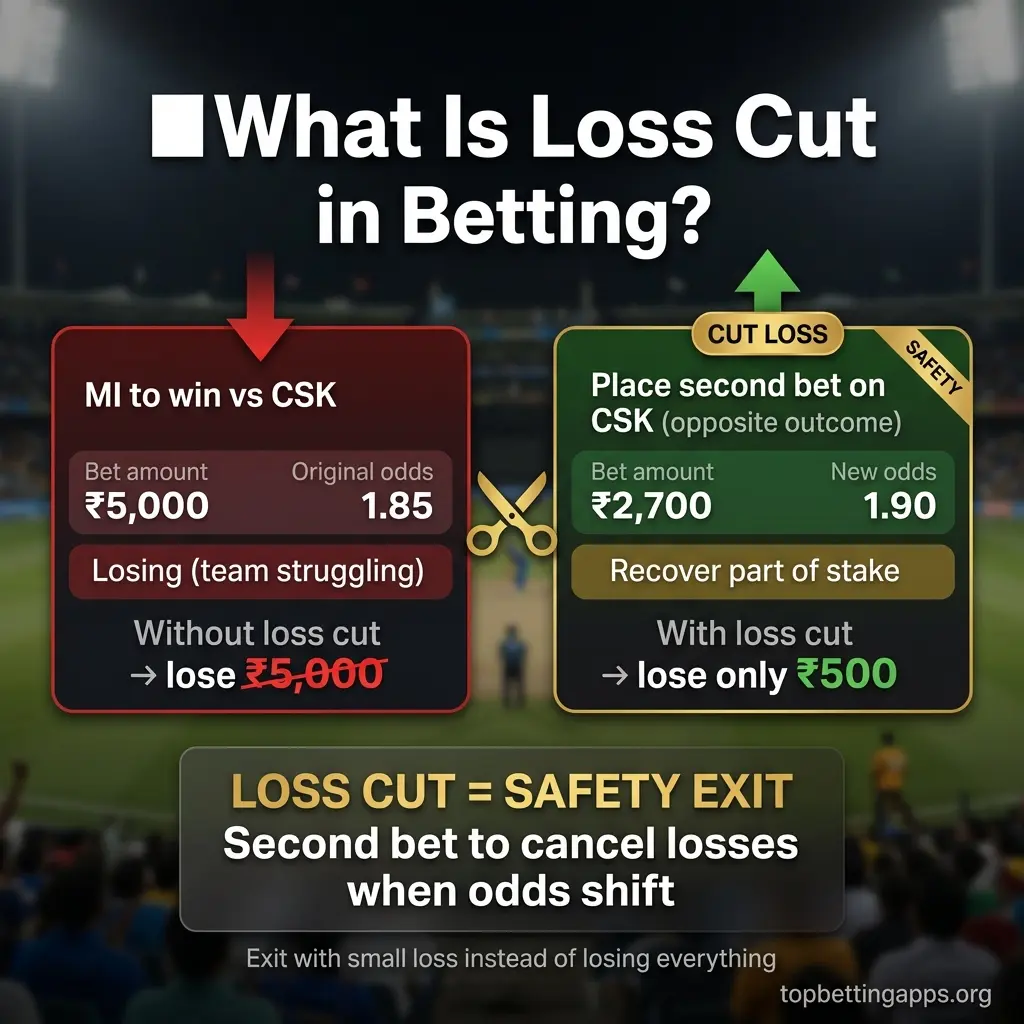
Loss Cut Meaning in Betting
Many people get confused about the specific loss cut in betting and how it differs from other moves. In the Indian market, this term usually means you are “cutting” your potential deficit. You do this by placing a lay bet (khana) if you originally placed a back bet (lagana). This is very common when using desi odds during a live match.
You might also hear people talk about a loss cut book set in betting as a single strategy. While they are related, they have different goals. A loss cut focuses only on stopping the bleeding when you are losing. You use it to save some of your money when the match situation looks bad for your team.
Key Indian Betting Terms You Need to Know First
Before you can understand how to protect your money, you must know the local language used in India. Most local shops and sites use the paise system, also known as desi odds, instead of decimal or fractional numbers. This system is very popular during the IPL or big matches like India vs Australia.
These terms describe whether you want a team to win or lose. Knowing the difference between lagana and khana is the first step to mastering any strategy. The table below explains these local terms and how they match up with global standards.
| Indian Term | Global Equivalent | Meaning |
|---|---|---|
| Lagana | Back bet | Betting for a team to win |
| Khana | Lay bet | Betting against a team to win |
| Desi odds | Paise/points system | Local odds format (50p = 1.50) |
| Book set | Green book / hedging | Balanced position on all outcomes |
Loss Cut vs Book Set vs Stop Loss — What Is the Difference?
It is very important to separate these three ideas because they happen at different times. If you ask what is loss cut book set in betting, you are looking at two different stages of a trade. You use a loss cut when things go wrong, but you use a book set when things go right. A stop loss is a rule you make for yourself before the match even begins.
The loss cut book set meaning in betting is basically about managing your total “book” or account. You want to make sure that no matter who wins, your balance stays healthy. Using these tools correctly allows you to stay in the game longer. This table shows exactly when to use each specific method.
| Term | Goal | When Used | Result |
|---|---|---|---|
| Loss Cut | Reduce loss | Odds moved against you | Smaller loss instead of full stake |
| Book Set | Lock profit | Position already winning | Profit on any outcome |
| Stop Loss Limit | Exit session | Decided before match | Predetermined exit rule |
Betting Exchange vs Sportsbook — How Loss Cut Works Differently
The way you apply these rules depends on where you play. Sites like SkyExchange, FairPlay, or Orbit are exchanges where you bet against other people. On the other hand, 1xBet and Parimatch are traditional sportsbooks where you bet against the house. This changes how you perform a khana move.
On an exchange, you have a direct “Lay” button which makes the process very fast. On a sportsbook, you usually have to place a new bet on the opposite team to get the same result. The table below highlights the main differences between these two types of platforms.
| Platform Type | How Khana Works | Best For |
|---|---|---|
| Exchange (SkyExchange, FairPlay) | Lay button — direct lay market | Full loss cut control |
| Sportsbook (1xBet, Parimatch) | Back opposite team | Simpler, less precise |
How Loss Cut Works — Step-by-Step with Indian Examples
You can understand this best by looking at real numbers in rupees. These examples show how you can save your money during a match.
Example 1 — Loss Cut on a Lagana (Back) Bet
Imagine an India vs Australia T20I where you place a lagana bet of ₹1,000 on India at desi odds of 80 (1.80). If India loses early wickets, the odds might jump to 150 (2.50). To stop a total loss, you place a counter-bet on Australia. This reduces your total deficit to perhaps ₹400 instead of losing the full ₹1,000 if India eventually loses the game.
Example 2 — Loss Cut on a Khana (Lay) Bet
In an IPL match between CSK vs MI, you decide to khana (lay) MI for ₹2,000 at desi odds of 90. This means you win if CSK wins. If MI starts playing very well and their odds drop to 40, your risk increases. You then place a lagana bet on MI to “cut” your potential loss, making sure you don’t lose your whole stake.
How to Calculate the Counter-Bet Amount
To find the right amount for a loss cut book set betting move, you need a simple calculation. If you use an exchange like SkyExchange, the site often shows you the number automatically. On a sportsbook like 1xBet, you divide your initial risk by the current odds of the opposite team. For example, to cover a ₹1,000 risk at odds of 2.00, you need to place ₹500 on the other side.
Cash Out vs Manual Loss Cut — Which Is Better for Indian Bettors?
Many modern Android APK files for betting come with a “Cash Out” button. This is a very fast way to do a loss cut in cricket betting with one tap. However, doing it manually on an exchange often saves you more money. Bookmakers take a bigger cut of the profit when you use their automatic button.
If you are watching the IPL and need to move fast, the button is great. But if you want the best value for your UPI deposits, learning the manual way is better. This comparison helps you choose the right method for your style.
| Feature | Manual Loss Cut | Cash Out Button |
|---|---|---|
| Control | Full — you set the price | Limited — bookie sets price |
| Commission | Exchange fee only | Bookmaker margin included |
| Speed | Requires manual action | One tap |
| Best Platforms | SkyExchange, FairPlay, Parimatch | bet365, Betway, 10CRIC |
When to Apply Loss Cut in an IPL Match
Timing is everything when you want to protect your balance. The odds change constantly based on what happens on the field.
After the Toss
The toss advantage can change desi odds before the first ball is bowled. Some IPL venues favor the team batting second. If your team loses the toss and the conditions look bad, you might consider an early move to protect your stake.
During Powerplay
The IPL powerplay is a time of high volatility. If the team you backed loses three wickets in the first six overs, the live odds will shift against you very fast. This is often the most common time to apply a safety bet.
During Death Overs
The game can flip in just six balls during the IPL death overs. If a big hitter takes charge, you will see a massive live odds shift in seconds. You must decide quickly if you want to stay in or use a loss cut to protect your money.
When NOT to Apply Loss Cut
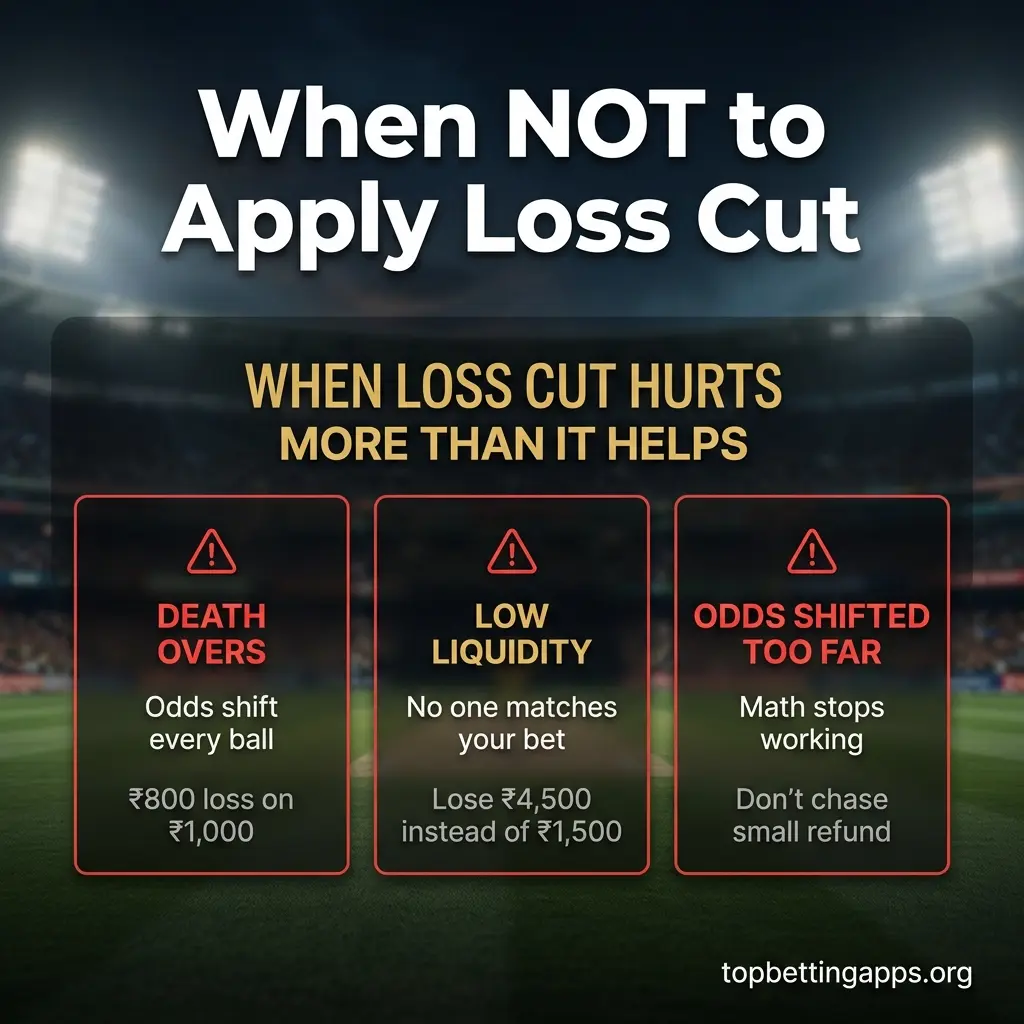
The success of managing your money depends on knowing when to step back. In some situations, trying to fix a bad position can actually lead to bigger losses because of fast price changes or a lack of other people on the market. You must understand the math so you do not waste your balance on a bad trade.
The following list shows three specific scenarios where using a loss cut in betting might hurt your wallet more than it helps:
- Late entry during death overs: If an IPL team needs 20 runs in the final over, the live odds shift after every single ball. If you try to place a counter-bet now, you might lock in a loss of ₹800 on a ₹1,000 stake. The high volatility and margins at this stage often make the insurance move mathematically useless.
- Low liquidity markets: In small T20 tournaments, there might not be enough money moving on the exchange. If you have ₹5,000 on a team at specific desi odds and the market is empty, your “khana” bet will not be matched. You might end up losing ₹4,500 instead of your planned ₹1,500 because the price is so poor.
- Odds already shifted too far: When a team has almost zero chance to win, the math stops working in your favor. To save just ₹100 from a ₹2,000 stake, you would have to risk a massive amount on the favorite. In this case, the small refund is not worth the extra effort or the risk of a technical error.
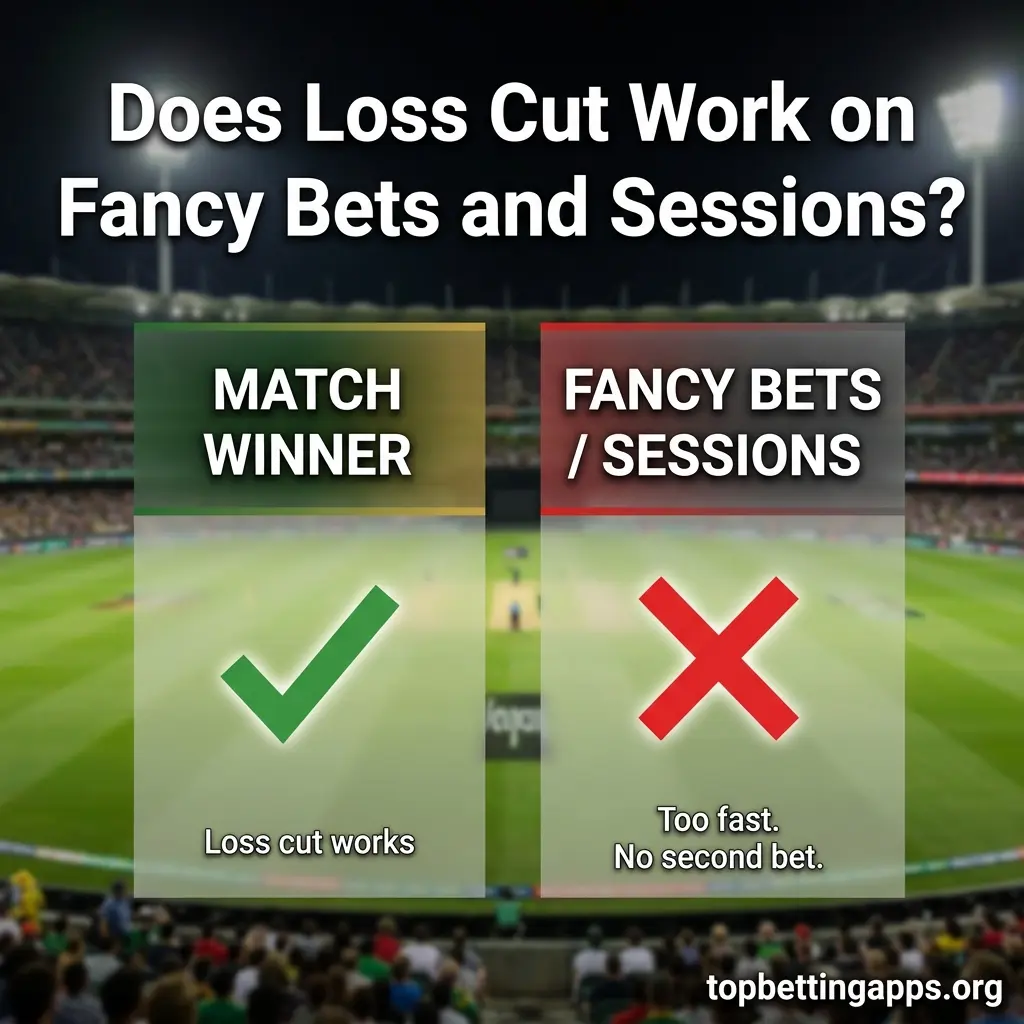
Does Loss Cut Work on Fancy Bets and Sessions?
You might wonder if you can use this for Fancy Bets or Session Bets. These are bets on things like 6-over runs, the lambi (20-over total), or an individual player score. The simple answer is no. These markets are “yes or no” and they usually close too fast for you to place a second bet.
What is loss cut in cricket betting rules usually applies only to the Match Winner market. Since session markets settle and disappear quickly, you cannot “lay” a session bet once you have already backed it. You have to wait for the result, so manage your money carefully on these specific markets.
Lost Ball in Cricket — Is It the Same as Loss Cut?
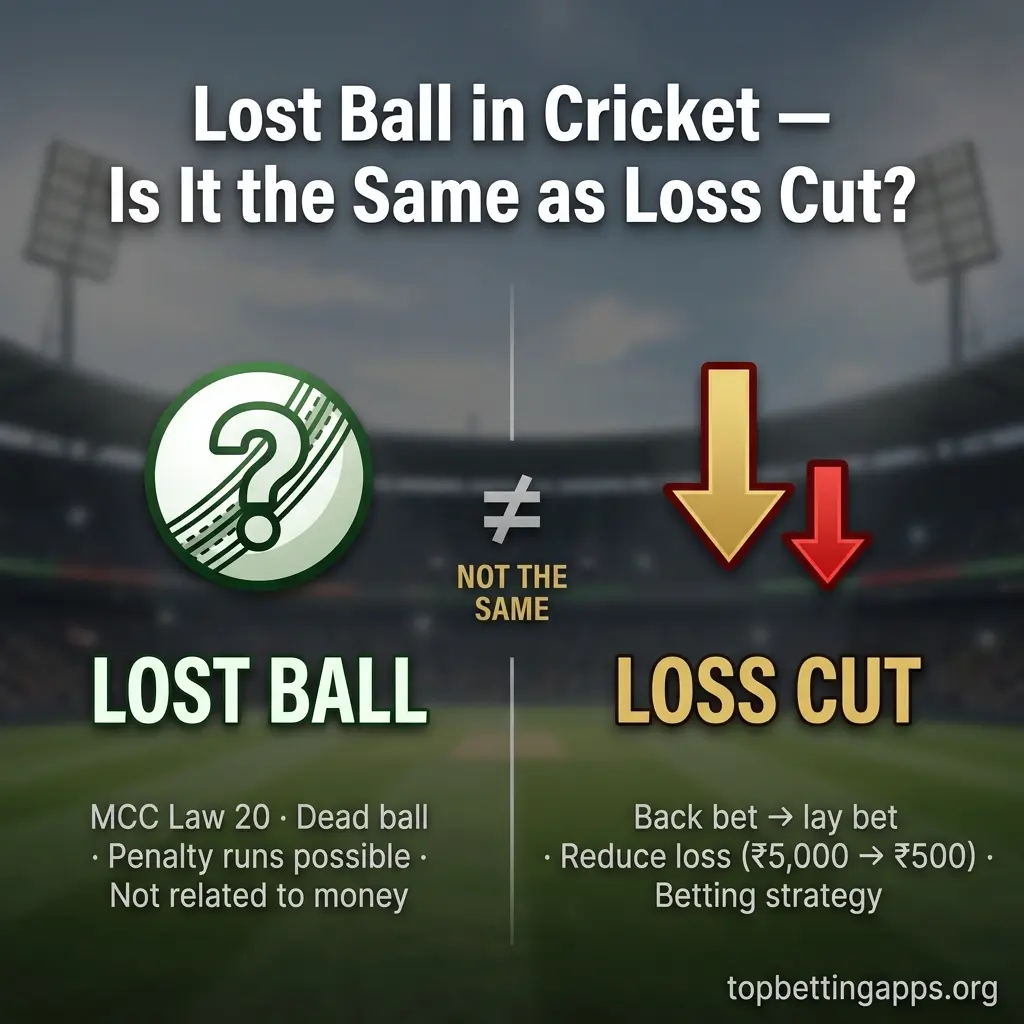
People sometimes confuse these terms, but they are not related to money. A lost ball in cricket is an official rule under MCC Laws (Law 20). If a ball cannot be found, the umpires call it a dead ball. The batting team might get penalty runs if the ball was lost due to something unfair. In the IPL, they just bring out a new ball and continue the game.
Is Loss Cut Betting Legal in India?
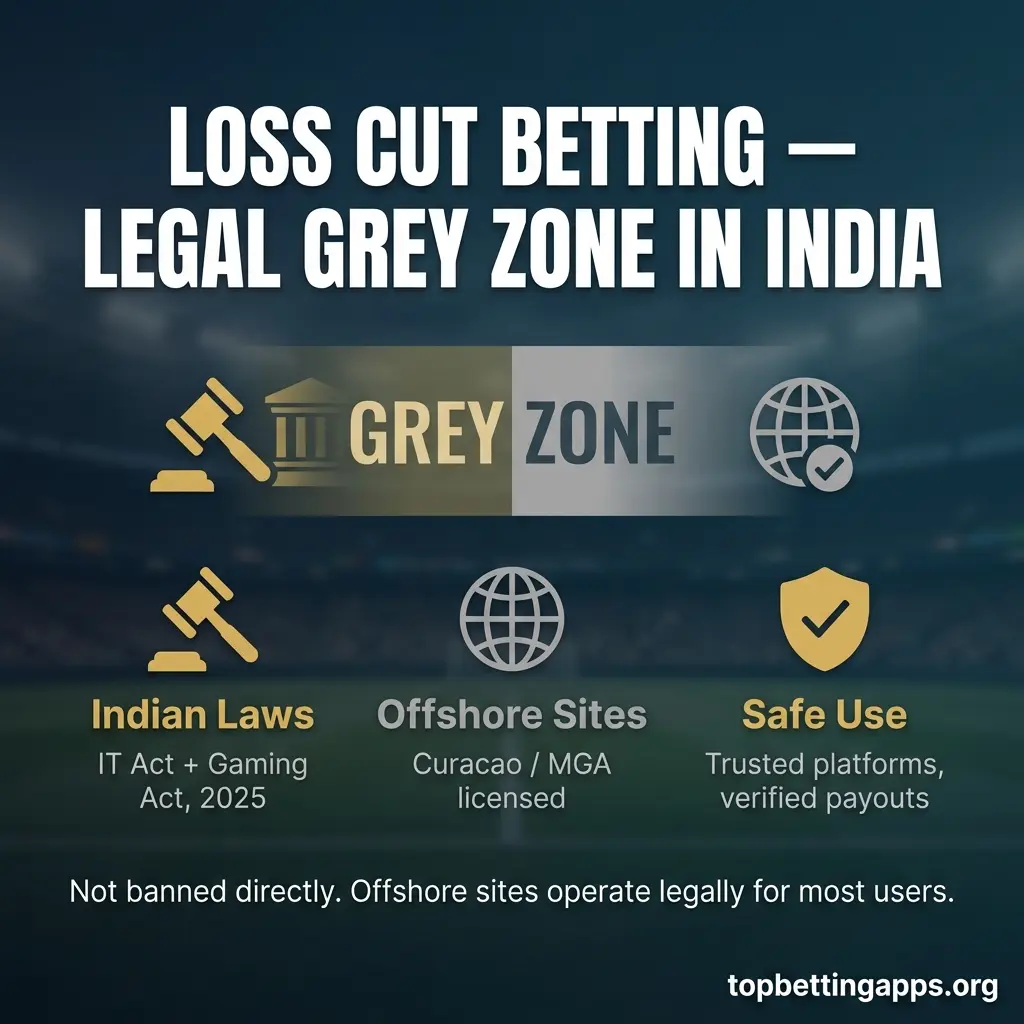
Legal rules for sports in India are mostly found in the Information Technology Act India and the new Promotion and Regulation of Online Gaming Act, 2025. While the central government has banned many real-money gaming apps to stop fraud, most fans still use offshore bookmakers. These sites often have a license from the Curacao Gaming Authority or MGA.
Because these sites are not based in India, they fall into a grey area for many users. It is very common for people to bet on the IPL using these platforms safely. You should always make sure to use a site with a good reputation for paying out winnings to your account.
Pros and Cons of Loss Cut Strategy
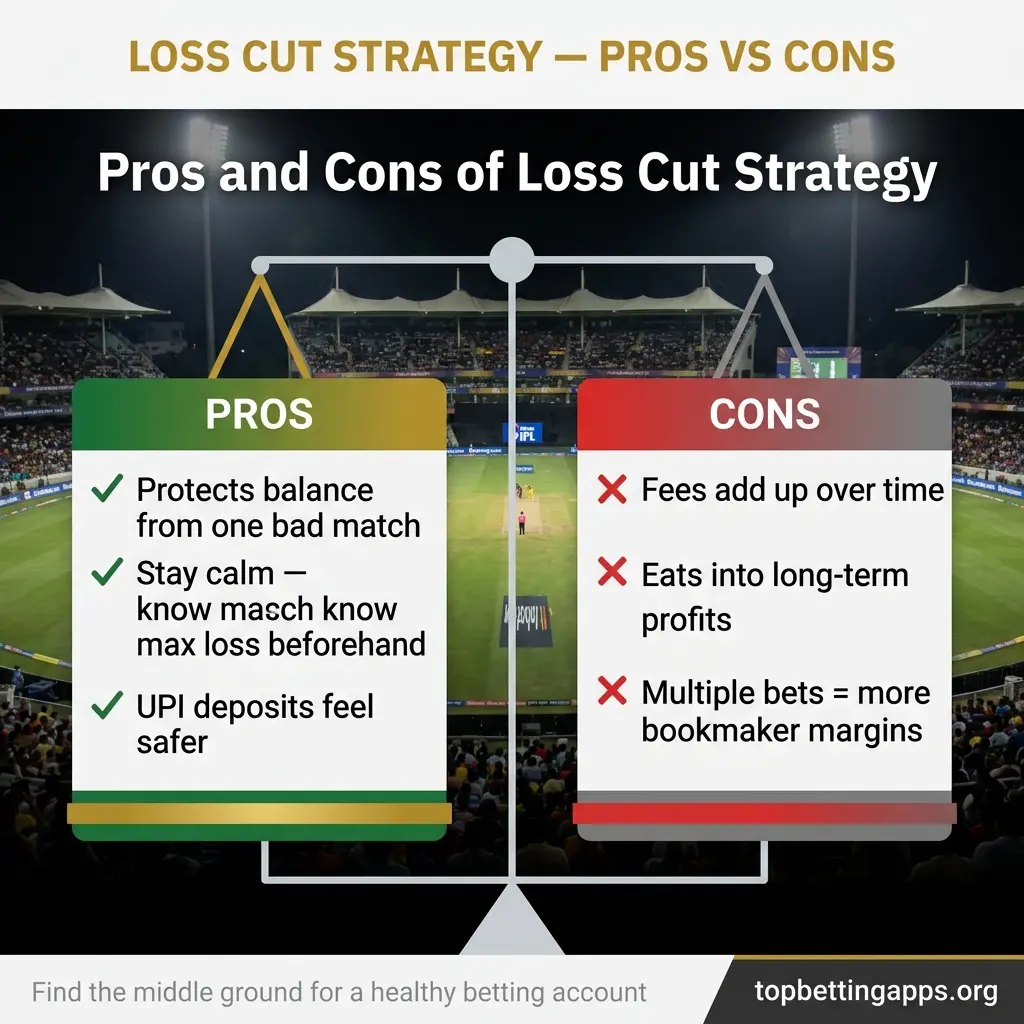
Using a specific plan to manage your money has both good and bad points. On the positive side, this method protects your ₹ balance from being wiped out in one bad IPL match. It allows you to stay calm because you know exactly how much you might lose before the game ends. If you use UPI to deposit, you can feel safer knowing your full stake is not at risk during every ball.
On the negative side, doing this too often can eat into your long-term profits. Using desi odds and placing multiple bets means you pay more in small fees or bookmaker margins. You have to balance the need for safety with the need to actually win a good amount of money. Finding this middle ground is the secret to a healthy betting account.
FAQ
What Is Loss Cut In Cricket Betting?
It is a strategy where you place a counter-bet on the opposite team to reduce your potential deficit. If the team you backed in an IPL game is losing, you use khana (lay) to save part of your stake. This ensures you do not lose your entire ₹ amount deposited via UPI if the match result goes against you.
What Is The Difference Between Lagana And Khana?
Lagana means you are backing a team to win the match, while khana means you are laying a team or betting that they will lose. These are the basic terms used for the IPL in India with desi odds. You use them together to create a loss cut or a profit-locking book set.
Is Loss Cut The Same As Cash Out In Betting Apps?
They have the same goal but work differently. Cash out is an automatic button provided by apps like 1xBet or Parimatch. A manual loss cut is when you place the opposite bet yourself, usually on an exchange like SkyExchange to get better value and avoid the high margins of a bookmaker.
Does Loss Cut Work On Fancy Bets And Session Markets?
No, it usually only works on the Match Winner market. Fancy Bets like 6-over runs or a player score are settled too quickly to place a counter-bet. Once you place a session bet, you generally have to wait for the result because these markets close as soon as the session ends.
Exchange Vs Sportsbook — How Is Khana Different On Each?
On an exchange like FairPlay, you can click a “Lay” button to bet against a team directly. On a sportsbook like bet365, you have to place a “Back” bet on the other team to get a similar result. Exchanges are generally better for this strategy because they offer more control over the price.
How Do I Calculate The Counter-Bet Amount For Loss Cut?
You can use a simple formula to find the right amount. Divide your initial stake by the current odds of the opposite team. If you are using desi odds, most exchanges like SkyExchange will show you the exact ₹ amount needed to cut your loss before you confirm the second bet.
Which Platform Is Best For Loss Cut Strategy In India?
Exchanges like SkyExchange and FairPlay are the best because they have a dedicated lay market. This makes the loss cut meaning in betting much easier to apply in real-time. However, sportsbooks like Parimatch are also good if you prefer using a simple and fast “Cash Out” button for your T20 bets.
When Should I Not Use Loss Cut In A T20 Match?
Avoid it if the odds move too fast or if there is low liquidity in the market. If you try to cut a loss during the last over of a T20 game, the price might change before your bet is accepted. This is different from the MCC Laws regarding a lost ball, as this is purely about market speed.
Post author
Updated:
Comments